Nonprofit Office Hours: Connecting Organizations, Sharing Ideas
Connecting nonprofits to resources and one another
What happens when nonprofit leaders, funders, board members and community partners gather in the same room with no presentation, no pressure and no formal agenda?
At Foundation for the Carolinas’ Nonprofit Office Hours, the answer has been new partnerships, candid conversations and a growing sense of community across Charlotte’s nonprofit sector.
Since launching in August 2025, the series has created a new kind of entry point for nonprofits looking to engage with FFTC. There’s no registration, presentation or formal agenda — just real conversations in an informal, welcoming setting.
“We wanted an easy, approachable way for nonprofits to connect with us,” said Jessie Hermann, vice president of nonprofit services at FFTC. “If you don’t already know someone at the Foundation or have an ‘in,’ it can feel hard to know where to start. Office Hours removes that barrier.”
Inspired in part by a community foundation in Monterey, Calif., that hosted virtual consulting hours, Hermann envisioned something uniquely community-centered for Charlotte.
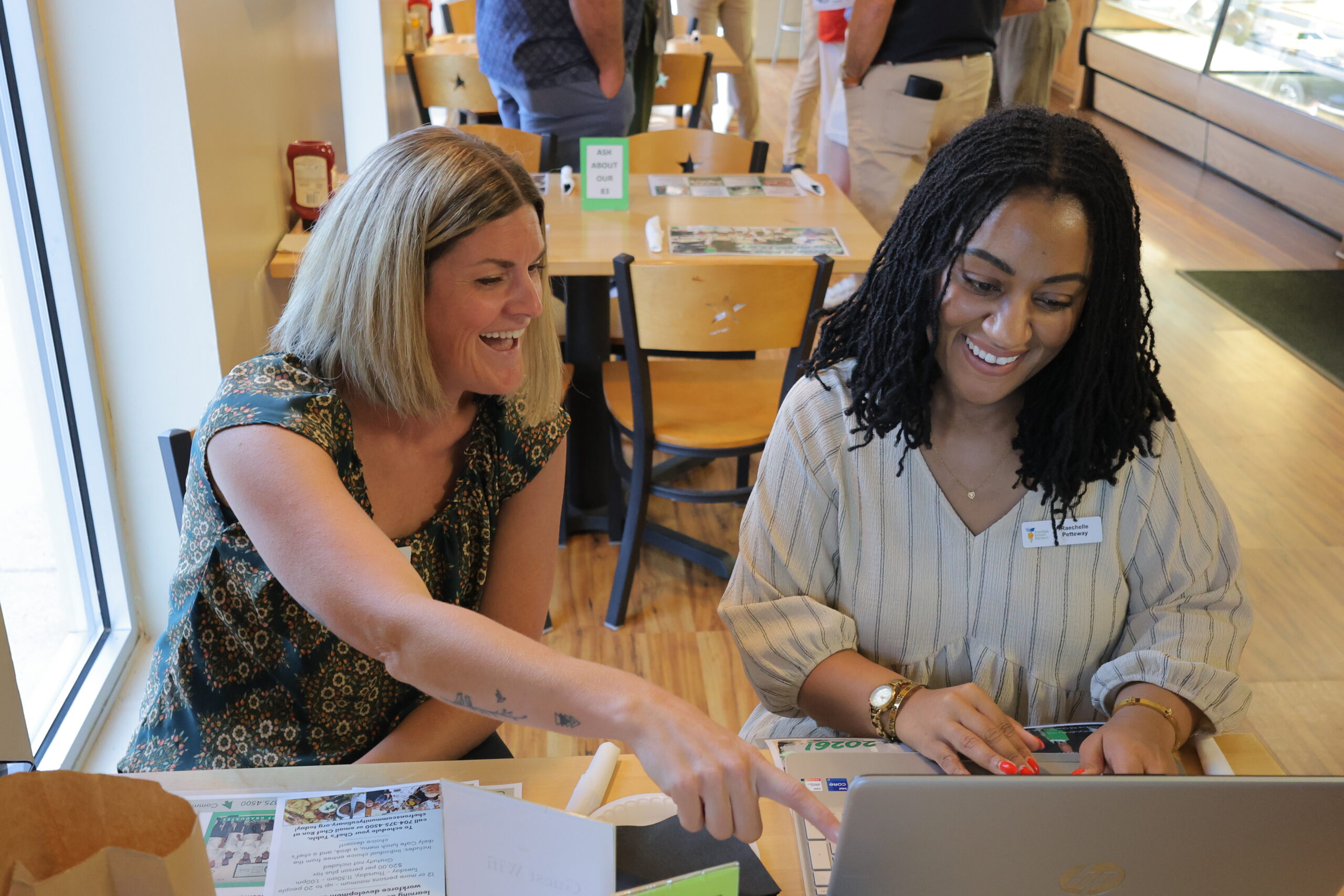
Jessie Hermann, VP, Nonprofit Services connecting with a Nonprofit Office Hours attendee.
“We recognized that nonprofits needed a casual space to connect, share challenges and have honest conversations,” she said. “This was about creating an accessible entry point where people could meet the right people and feel welcomed.”
That spirit of accessibility shaped every aspect of the program — including the decision to host sessions at nonprofit coffee shops and community spaces throughout the region.
“These are organizations already doing meaningful work in the community,” Hermann said. “We wanted to support them while also creating an environment that feels approachable and comfortable. People come in wearing jeans and T-shirts. It creates a level playing field.”
For Hermann, one of the earliest markers of success was seeing FFTC physically show up outside its uptown office.
“We wanted the Foundation to meet nonprofits where they already are,” she said. “Being present in the community matters.”
The relaxed format has also led to more candid and collaborative conversations.
“Nonprofit leaders can openly share what they’re experiencing because it doesn’t feel like a formal meeting with a funder,” Hermann said. “We’re there to listen, learn and better understand what organizations need.”
What surprised Hermann most was how quickly the gatherings evolved into a space not only for nonprofits to connect with FFTC but also with one another.
“The value is almost split between talking to the Foundation and talking to other nonprofit leaders,” she said. “The fellowship and community-building that happens organically has been really meaningful.”
Those connections have already sparked collaborations across Charlotte’s nonprofit community — from organizations sharing silent auction resources to nonprofits offering free trainings and volunteer support to one another.
The program has also created new connections within FFTC itself. In addition to the Nonprofit Services team, staff from additional departments, such as legal, marketing, investments and others regularly participate. That cross-functional presence strengthens the Foundation’s awareness of nonprofits’ work and helps teams identify more holistic ways to support organizations across the community.
Come one, come all
For Taylor Birkrem, the welcoming atmosphere stood out immediately.
Birkrem serves as director of development for The Housing Collaborative, a nonprofit supporting more than 80 counties across North Carolina focused on providing affordable housing solutions and supportive services that help individuals and families achieve housing stability.
“I remember walking into Change Please coffee shop and Jessie greeted me right away and made me feel welcome,” Birkrem said. “I never ran out of people to talk to or topics to cover.”

Nonprofit Office Hours creates space for resource connection, peer learning and relationship building.
Birkrem first discovered Nonprofit Office Hours through FFTC’s LinkedIn page shortly after beginning her role in Charlotte’s nonprofit sector. Since attending, she’s built relationships with both newer and longtime nonprofit leaders — including a connection with a representative from Target’s corporate philanthropy team shortly after submitting a grant application.
“It truly feels like an open-door environment,” she said. “There’s no wrong topic. You can ask questions, learn from FFTC and learn from other nonprofit leaders at the same time.”
The casual setting has also helped organizations uncover new ways FFTC can support long-term sustainability and growth.
That was the experience of Ryan Smith, a CPA with Carr, Riggs & Ingram, a nationally ranked accounting and advisory firm. Ryan leads the nonprofit healthcare practice for CapinCrouse, a division of CRI that serves mission-focused nonprofit organizations, churches, higher education institutions, international mission organizations and healthcare entities.
Smith attended Nonprofit Office Hours while on the board of NC MedAssist, a nonprofit dedicated to improving health outcomes by providing free prescription medications to uninsured North Carolinians.
“Sometimes meeting with a wealth advisor can feel intimidating,” Smith said. “But Nonprofit Office Hours felt relaxed and approachable with genuine conversations.”
During those conversations, Smith helped connect NC MedAssist with FFTC’s nonprofit investment management expertise at a pivotal moment in the organization’s growth. For years, NC MedAssist managed its reserves through conservative cash-management tools aligned with its finance policy and commitment to responsible stewardship of donated funds.
As the organization’s financial position strengthened and its board looked ahead to long-term sustainability, Smith encouraged a thoughtful review of how NC MedAssist could better position its reserves to support the mission over time. Following a thorough vetting process by the Finance Committee and organizational leadership, NC MedAssist updated its policy and established three new funds with FFTC.
The decision reflects a strategic step forward for NC MedAssist as it approaches 30 years of service: strengthening financial sustainability, protecting the organization’s ability to respond to North Carolina’s healthcare needs, and ensuring that its resources continue working in support of the people and communities it serves.
“We now share that we work with FFTC because it reflects the maturity and strategic vision of the organization,” Smith said. “It’s helped position NC MedAssist for long-term growth.”
Smith also said the experience opened the door to learning more about FFTC’s broader charitable giving expertise, including support for complex gifts like appreciated stock and business interests — resources that can benefit nonprofits and donors alike.
Connecting nonprofits

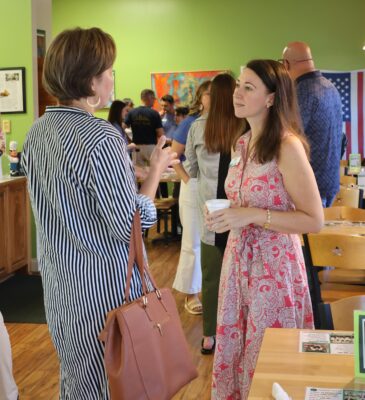
FFTC team members ready to greet guests at a previous Nonprofit Office Hours session at Julia’s Cafe.
For Hermann, stories like these reflect the deeper purpose behind the program.
“At the end of every conversation, I want nonprofits to feel seen,” she said. “I want them to know we truly care about what they’re doing and that we’re not just listening — we’re using that information to help connect them with resources, funders and opportunities.”
The program also reflects FFTC’s broader commitment to being a beloved community partner and practicing trust-based philanthropy.
“Foundations and funders can sometimes feel intimidating,” Hermann said. “This is our way of flipping that dynamic and showing up as a true partner.”
As Nonprofit Office Hours continues to grow, FFTC is exploring opportunities to expand the program regionally while continuing to create spaces where nonprofits feel comfortable engaging with the Foundation and one another.
For Hermann, one of the most encouraging outcomes has been hearing directly from the community.
“People have shared that they can see how FFTC is showing up and engaging in the community,” she said. “That’s incredibly meaningful because ultimately this is about building trust.”
And sometimes, trust starts with something as simple as coffee and conversation.
To learn more about FFTC’s Nonprofit Office Hours, visit fftc.org/nonprofit_resources.